
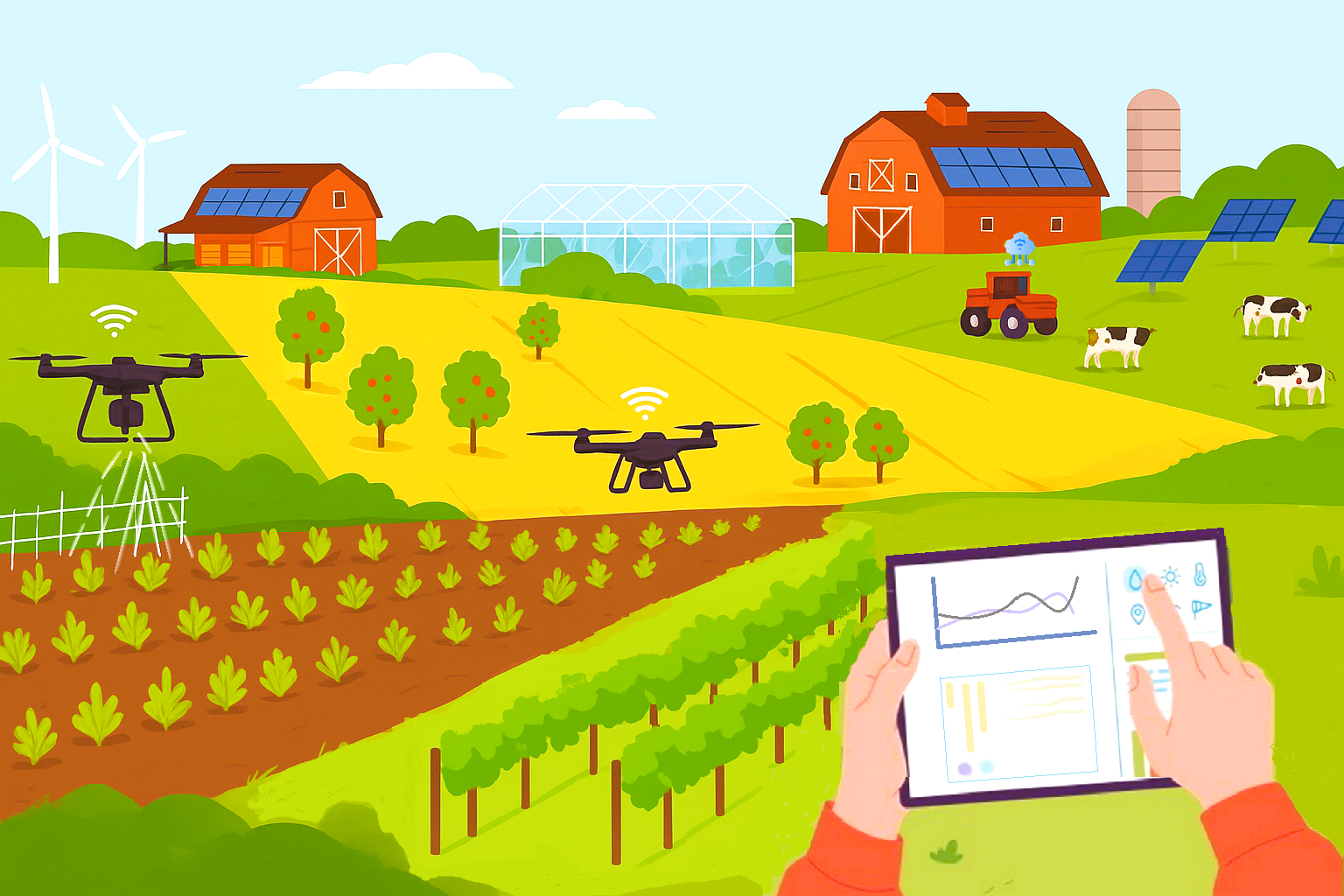
Smart agriculture is still insufficiently utilized across the entire program area, especially among small-scale agricultural producers. A common characteristic among farmers is a focus on 'traditional' and often economically less viable methods of production and culture, resulting in a slow adoption of new crops and technologies. The program area lacks of clearly defined goals leading to greater adoption of smart agriculture, as well as the absence of infrastructure for knowledge dissemination and building trust in the implementation of smart agriculture.
An interdisciplinary approach, i.e., collaboration between experts in IT and other modern technologies along with agronomists, will provide the prerequisites for selecting specific, market-proven technological elements and integrating them into functional systems.
To make national agricultural production competitive in all three countries, there needs to be a focus on quality, added value, and increased productivity, achievable through the adoption of solutions offered by smart agriculture, with focus on the strategic importance of producing sufficient quantities of locally sourced, and healthy food.